
What are the Key Steps Involved in Concrete Demolition?
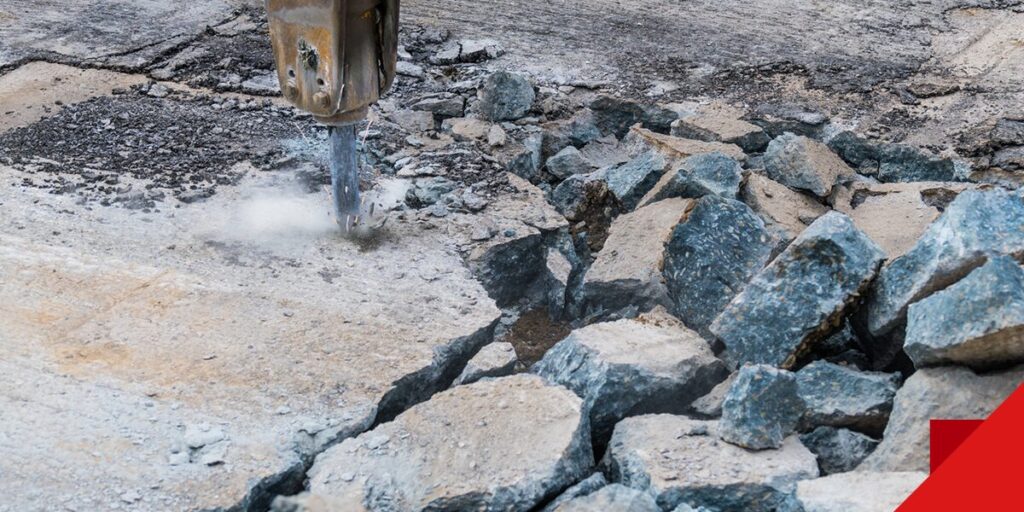
Commercial concrete demolition carries high stakes for property managers and facility owners. Damaged concrete creates safety hazards, disrupts operations and threatens project budgets. Professional concrete demolition requires risk management to protect assets, maintain business continuity and complete work on schedule. A successful concrete demolition process combines technical precision with comprehensive safety planning.
How Concrete Demolition Works
Crews can typically complete concrete demolition in four steps.
1. Pre-Demolition Assessment
The first step in concrete demolition is site assessment. This evaluation identifies structural risks, utility conflicts and site-specific challenges before work begins. Construction staff examine conditions to determine effective methods and develop a comprehensive demolition plan.
Critical pre-demolition factors include:
- Structural analysis evaluating load-bearing elements and reinforcement patterns.
- Utility identification coordinating with companies to locate electrical lines and gas mains.
- Site access assessment for equipment and staging areas.
- Environmental testing for hazardous materials.
This technical evaluation transforms the steps of concrete demolition from guesswork to strategic planning, giving property managers realistic schedules grounded in site data.
2. Property and People Protection
Safety planning protects everyone on-site and supports compliance. The Occupational Safety and Health Administration (OSHA) reports that demolition work involves many hazards that cause injuries and fatalities. Comprehensive safety measures protect employees, customers and property.
Every project requires detailed safety planning with:
- Site security barriers preventing unauthorized entry.
- Personal protective equipment for all staff members.
- Fall protection systems for elevated work.
- Atmospheric monitoring protecting respiratory health through wet-cutting methods and engineering controls.
Safe concrete demolition methods protect your investment while meeting OSHA standards and industry best practices.
3. Controlled and Efficient Execution
Modern concrete breaking and removal combines proven methods with advanced equipment to minimize disruption. The appropriate techniques depend on on-site conditions and your operational requirements. Common methods for commercial concrete demolition include:
- Mechanical demolition using hydraulic breakers and crushers mounted on excavators for foundations and slabs.
- Sawing and cutting with diamond blades for precise partial removal around active operations.
- Controlled breaking using hydraulic splitters for quiet, low-vibration work in tight spaces.
Equipment selection should match the project scale and constraints.
4. Debris Removal and Site Preparation
The U.S. Environmental Protection Agency identifies construction and demolition debris as a significant waste stream, making proper disposal and recycling essential. The concrete removal process includes:
- On-site sorting to separate concrete from rebar.
- Strategic loading to maximize truck capacity.
- Recycling coordination to divert material from landfills.
- Final grading.
Proper debris management also involves coordinating logistics and ensuring compliance throughout the concrete demolition process.
Contact Us for Professional Concrete Demolition Services
Successful concrete demolition requires contractors who understand risk management and execution. R. J. Potteiger Construction Services, Inc. has supported commercial, industrial and institutional clients across Central Pennsylvania for over three decades. For projects requiring concrete removal and replacement, we deliver results that protect your operations.
We have proven experience anticipating challenges, a safety focus through OSHA-compliant procedures and professional qualifications as a fully licensed, bonded and insured contractor. Whether your facility needs complete demolition or specialized breaking, we have the knowledge and equipment to complete work safely and efficiently.
Contact us today to discuss your requirements.