

Concrete vs. Asphalt Parking Lots: What’s Best for Your Business?
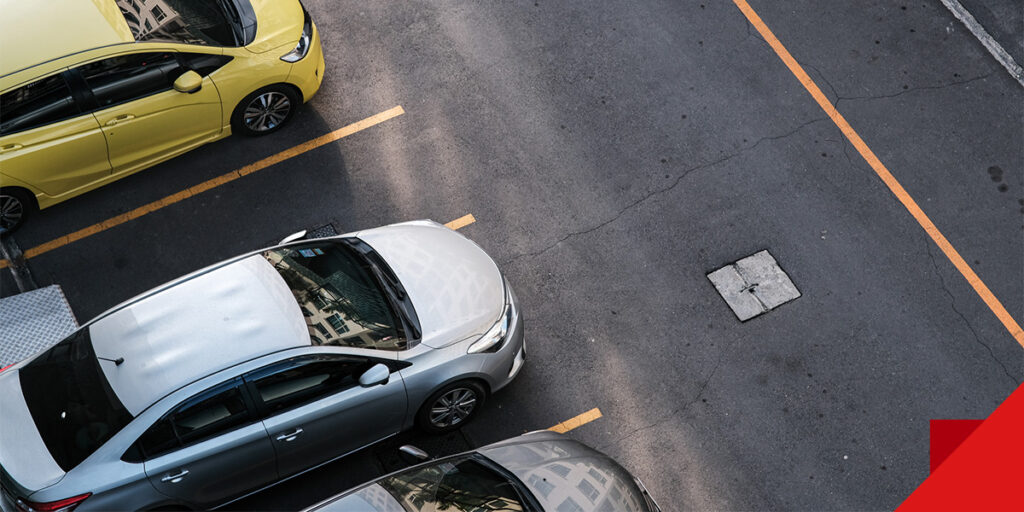
Your parking lot is the physical welcome mat for your business. For retail centers, office complexes and industrial facilities across Pennsylvania, parking lot surface options set the tone for customer experience and operational efficiency.
By understanding the true performance differences, you can compare the long-term value of each option and choose accordingly. Explore a comprehensive comparison of these two dominant parking lot materials below.
Concrete vs. Asphalt Parking Lots
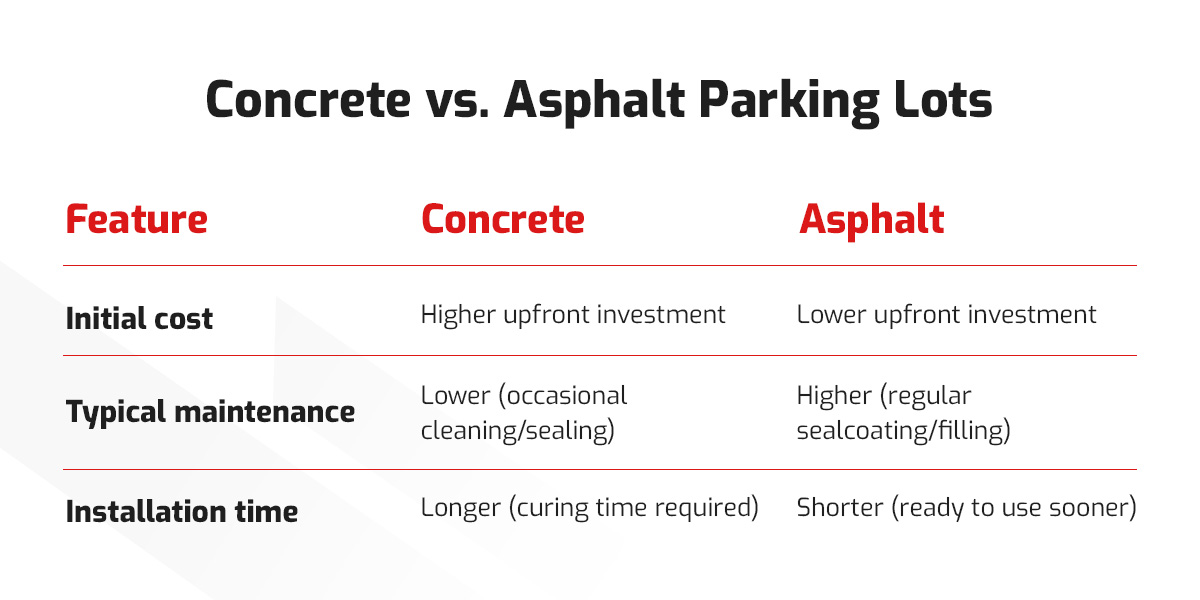
When evaluating pavement options, it is helpful to see the key differences side by side. While both materials provide a stable surface for traffic, their performance characteristics vary over time.
| Feature | Concrete | Asphalt |
|---|---|---|
| Initial cost | Higher upfront investment | Lower upfront investment |
| Typical maintenance | Lower (occasional cleaning/sealing) | Higher (regular sealcoating/filling) |
| Installation time | Longer (curing time required) | Shorter (ready to use sooner) |
Cost Differences Between Asphalt and Concrete
While asphalt lots often have a lower initial installation cost, you’ll need to consider the ongoing expenses to fairly compare the investments. This forward-looking approach, known as life-cycle cost analysis (LCCA), is the official method used by government agencies, like the Pennsylvania Department of Transportation, to determine the true, long-term economic impact of infrastructure investments.
When viewed through the LCCA lens, concrete’s higher up-front cost is often offset by its minimal maintenance needs and exceptional longevity. The final cost of any pavement project depends on several factors, including materials, labor and required thickness.
Although asphalt requires recurring expenses for sealcoating and resurfacing, concrete’s durability typically results in a lower total investment.
Durability and Lifespan
Commercial parking lots can face heavy traffic. They must support parked cars, delivery truck loads and the constant friction of turning tires. Durability is the measure of how well the pavement resists this stress.
Asphalt Lifespan
Asphalt’s lifespan is heavily dependent on adherence to a strict maintenance schedule. Asphalt is flexible and made from crude oil, which allows it to move slightly under heavy loads. While this flexibility is a strength, it also means the surface is prone to fatigue over time.
Factors that shorten asphalt lifespan include:
- Heavy truck traffic: Constant weight from dumpster trucks or delivery vehicles can cause rutting or “alligator cracking.”
- UV exposure: The sun can oxidize the asphalt binder, causing it to become brittle and gray.
- Water penetration: If cracks are not sealed immediately, water seeps into the sub-base, leading to potholes.
Concrete Lifespan
Concrete is a rigid pavement designed to distribute loads over a wide area. A professionally engineered and installed concrete parking lot can last decades.
The rigidity of concrete makes it the superior choice for areas with heavy commercial traffic. It does not rut or deform under the weight of stationary heavy vehicles, making it the standard for loading docks, dumpster pads and bus loops. Because it relies on cement, water and aggregates, it maintains its structural integrity much longer than asphalt, even with minimal intervention.
Maintenance Requirements
Every parking lot requires care, but the best approach varies depending on the material you choose. You must decide whether you have the resources to manage an active maintenance schedule.
Asphalt Lot Maintenance
Neglecting asphalt for even a few years can lead to larger issues. A typical asphalt maintenance schedule includes the following:
- Sealcoating: This is the most visible maintenance task. You should apply a sealcoat layer several months after installation and then every few years thereafter. This protective layer shields the binder from UV rays and chemicals.
- Crack filling: As the pavement flexes and ages, cracks will appear. These must be filled annually to prevent water from reaching the sub-base.
- Resurfacing: At the end of a lot’s life, the top layer of asphalt can be milled off and replaced with a new overlay, as long as the base is still intact.
Concrete Lot Maintenance
Concrete is often described as a zero-maintenance material, and while that is an exaggeration, it is largely accurate. The primary maintenance tasks for concrete involve keeping the surface clean and ensuring the joints are functioning correctly:
- Joint sealing: Concrete slabs are poured with expansion and control joints to allow the material to expand and contract without cracking. These joints should be inspected and sealed to prevent incompressible debris or water from penetrating.
- Cleaning: Concrete benefits from occasional cleaning to remove oil stains or tire marks, which are more visible on the lighter surface.
- Repairs: If a slab cracks or heaves, the repair is more involved. Repairing a concrete parking lot often requires cutting out and replacing the entire damaged section to restore structural integrity.
Climate and Weather Performance
Central Pennsylvania experiences a full four-season climate, ranging from hot, humid summers to chilly, snowy winters. Your parking lot must be able to handle both temperature spectrums.
Winter Weather Performance
When water enters a crack in the pavement, it expands as it freezes, exerting pressure on the surrounding material. This cycle leads to issues with potholes and cracks.
Asphalt’s dark color helps it absorb heat from the sun, which can melt snow and ice faster than concrete. However, the extreme cold can make asphalt brittle and more prone to cracking if the sub-base shifts.
Modern commercial concrete uses air-entrainment — microscopic air bubbles trapped in the mix — to give freezing water room to expand without shattering the concrete. Concrete is also more resistant to road salts, whereas salt can sometimes accelerate the deterioration of asphalt sealants.
Summer Weather Performance
In the height of July, pavement temperatures can reach scorching levels. Consider how each parking lot material option holds up to the heat:
Asphalt parking lots absorb heat. One study found that asphalt surfaces can reach temperatures of up to 150° Fahrenheit, which makes the asphalt binder soft. If heavy trucks turn their wheels on hot asphalt, they can scar the surface or create permanent ruts.
Concrete has a higher solar reflectance index (SRI) — white concrete parking lots can approach an SRI of 100. Its light color reflects sunlight, staying much cooler than asphalt. The higher SRI maintains the material’s strength during heatwaves and reduces the “heat island” effect around your buildings.
How to Choose the Right Pavement for Your Business
The right pavement choice depends on your specific business goals, financial situation and property.
Pick asphalt for your lot if you:
- Need to minimize up-front cost to get the facility running.
- Want to save time on curing and laying the concrete.
- Can budget for and schedule regular sealcoating and crack filling.
Select concrete for your lot if you:
- Want the lowest total cost of ownership.
- Have a lot that handles heavy trucks, loading docks or dumpster traffic.
- Aim to minimize maintenance after installation.
Get Professional Recommendations for Your Property
The best way to decide between concrete and asphalt is to consult with a contractor who understands the Central Pennsylvania environment. R. J. Potteiger Construction Services, Inc. provides skilled commercial concrete solutions and site evaluations throughout the region. Whether you are looking for a durable new concrete lot or considering an asphalt-to-concrete conversion to eliminate maintenance headaches, our team can guide you toward the right investment.
We will help you build a parking surface that supports your business for the long haul. Contact us today to schedule your site evaluation for a detailed assessment and a transparent quote from trusted concrete parking lot contractors.